Revising a long manuscript means working at two scales: the sentence in front of you and the story around it. Quillgon gives the prose room on the page, with the scene’s supporting details available in an inspector.
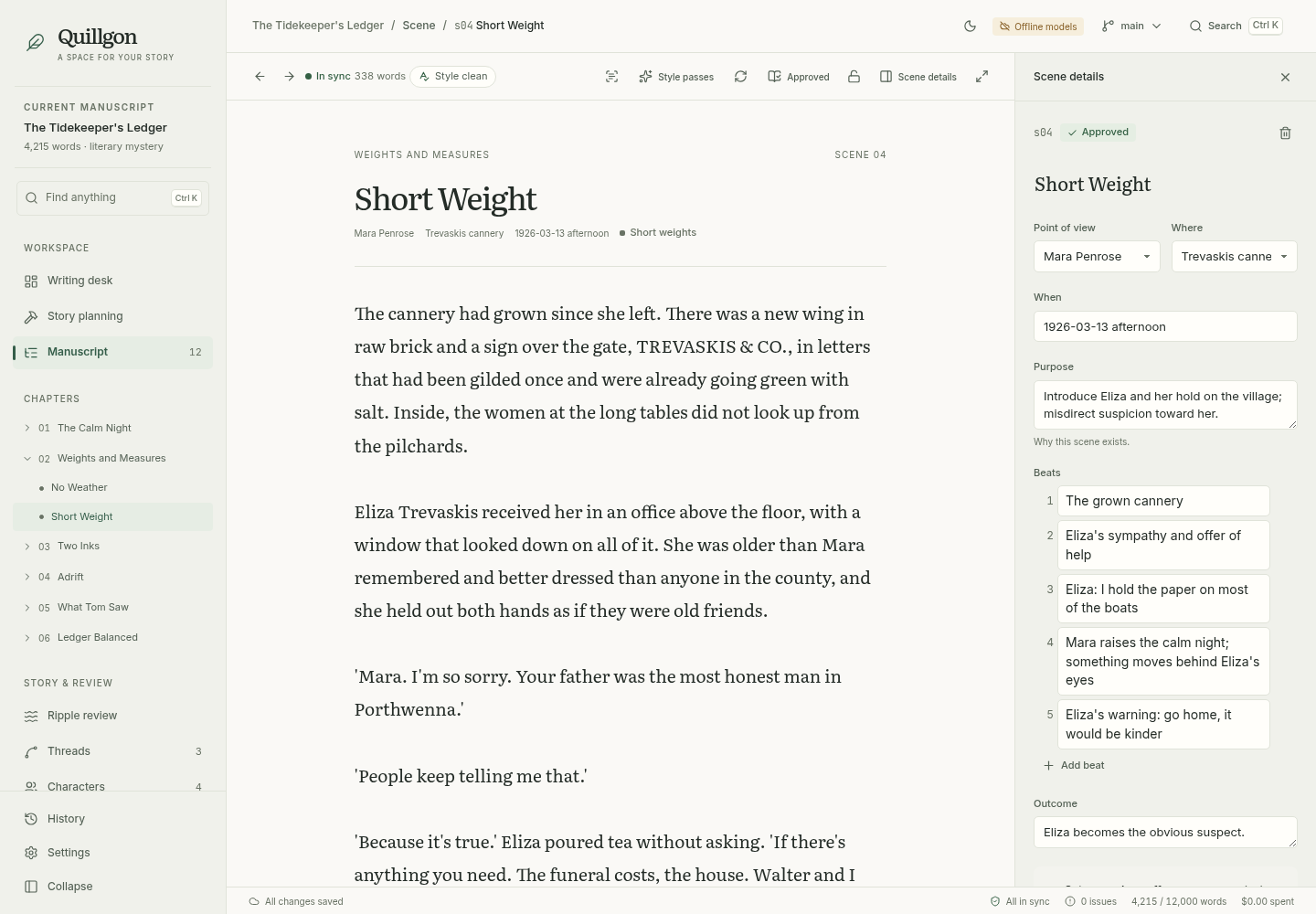
Write by hand, or draft from the plan
Generate a draft from the scene card, edit it yourself, or write the prose directly. A hand edit can change a story fact, so Quillgon reads the revision back into the graph and shows the facts it thinks changed. Review that interpretation before relying on it elsewhere.
Make your style rules explicit
The style sheet includes spelling, quotation marks, dialogue tags, punctuation preferences, never-words, preferred words, and sentence length. Deterministic checks can mark rule violations as you type. AI-assisted line edits propose changes against the rules and voice context you choose.
Rules learned from your accepted edits remain proposals you can review. A style sheet gives the system a clearer target; it does not replace the choices that make a voice distinctive.
Bring in another reading
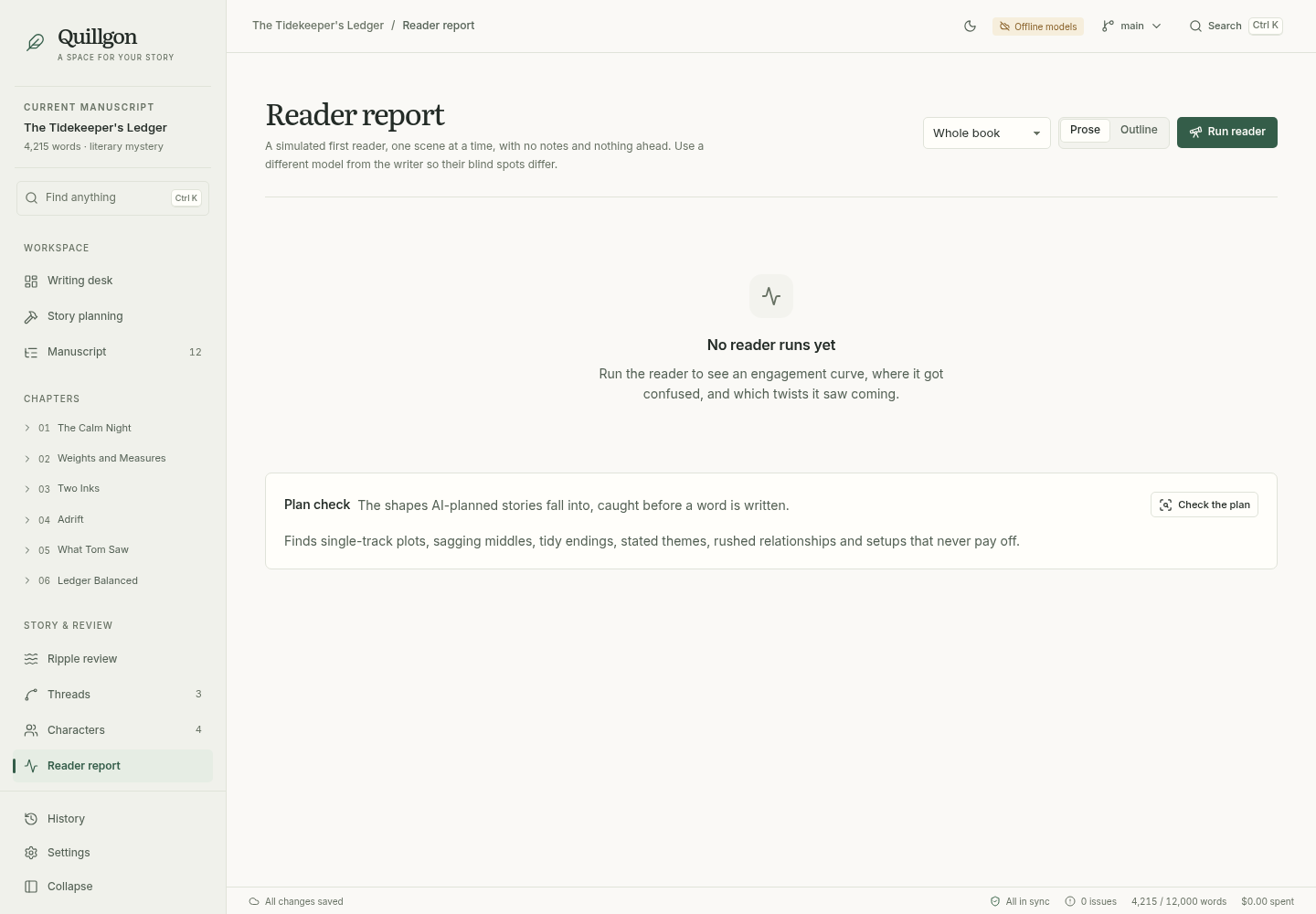
The reader report looks at engagement, confusion, stretches of boredom, and whether a twist was predictable or felt fair in hindsight. You can run an outline reading before committing to a prose draft. Treat simulated-reader feedback as another perspective to consider.
Make the revision reversible
Ripple proposals show the affected scenes and their differences for individual review. Applying a round creates a Git commit in the book’s history. What-if branches let you explore an alternative version and compare it before deciding where the story goes.